March 25, 2026
Geotechnical, Environmental, and Dam Engineering Design Services
Location: Roan Mountain, Tennessee
Client: Ripshin Lake Corporation
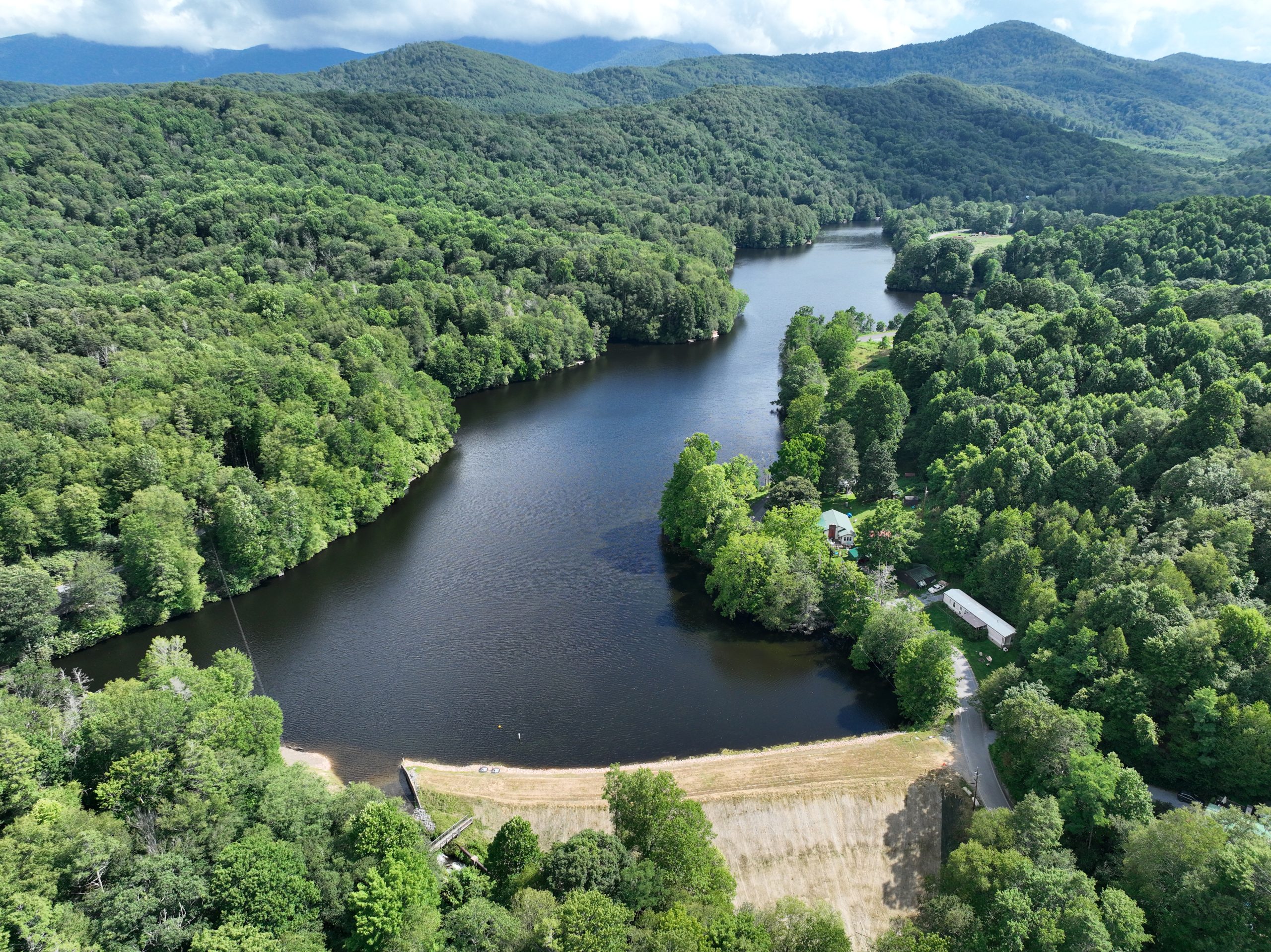
– Stabilized a 43-foot-tall, 395-foot-long earthen dam, protecting nearby homes & infrastructure
– Replaced an aging siphon with two 20-inch HDPE pipes
– Managed 15 inches of rainfall during Hurricane Helene without overtopping
– Improved performance & reliability of the 56-acre reservoir
The Project
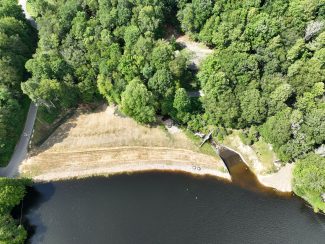
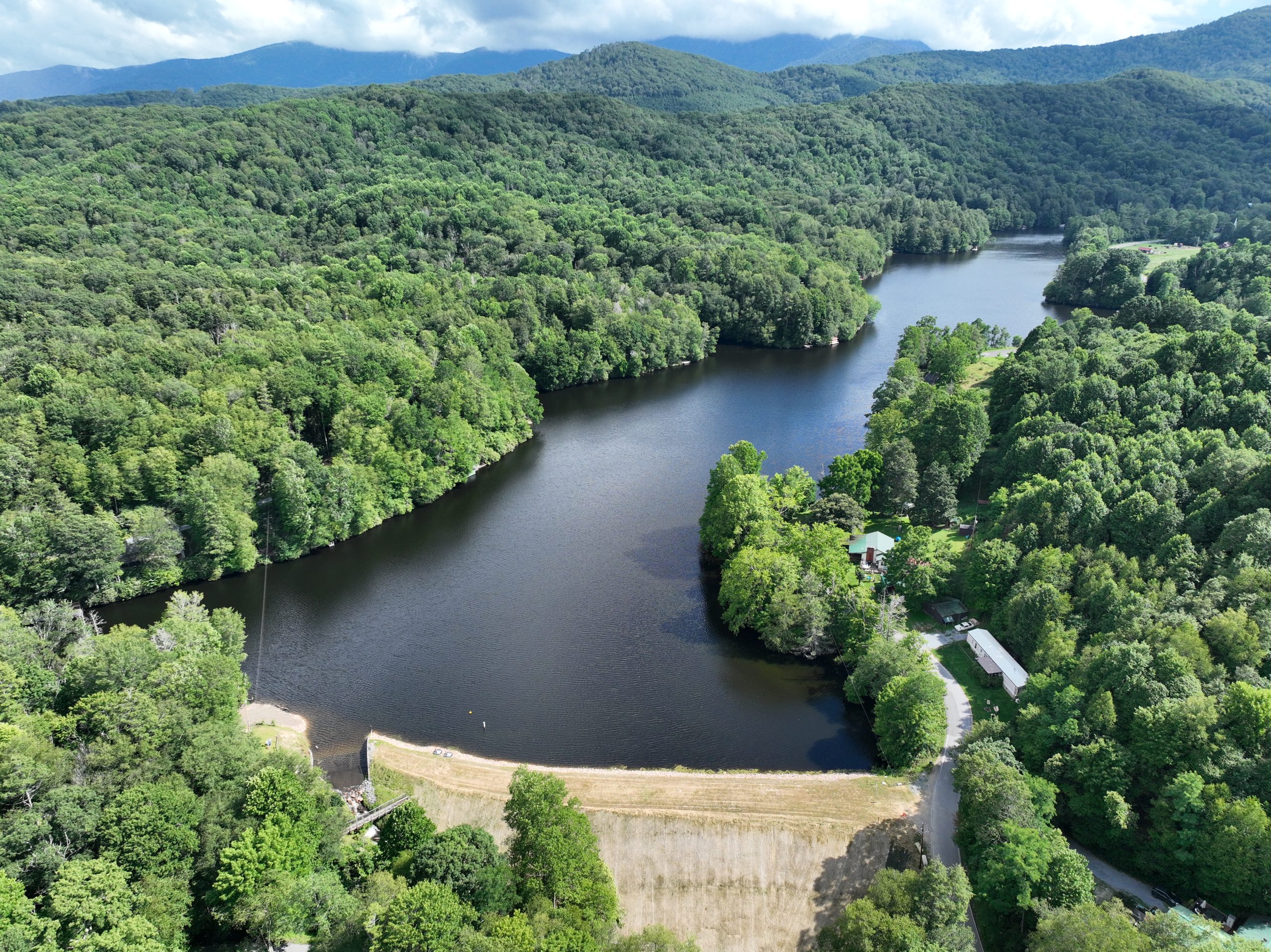
The historic Ripshin Lake Dam is classified as a Small, High Hazard Dam due to its location above nearby residences, Highway 19, and the town of Roan Mountain. Originally constructed in two stages in the 1920s and 1940s and modified in the 1990s, this 43-foot-tall, 395-foot-long earthen dam impounds a 56-acre lake.
With aging infrastructure, internal erosion concerns, an outdated siphon system, seepage, and embankment stability concerns, the dam required comprehensive evaluation and modernization to ensure long-term safety and regulatory compliance.
The Ripshin Lake Corporation selected S&ME to first evaluate the condition of the existing lake drain siphon system, which had reached the end of its service life. That selection was based on S&ME’s demonstrated technical expertise in:
- Dam safety
- Geotechnical engineering services
- Hydrologic and hydraulic analysis
- Spillway design
- Emergency Action Plans
- Construction-phase problem solving
After performing visual, diving, and ultrasonic inspections of the aging steel siphon to confirm that advanced deterioration required full replacement, a geotechnical exploration, historical research, and stability analysis indicated that the dam was constructed with semi-hydraulic fill and stability improvements were required for the dam. S&ME was tasked with designing and executing a comprehensive rehabilitation program to strengthen and modernize the dam.
The Challenge
This project required a multi-disciplinary, comprehensive engineering services response to address aging infrastructure and complex subsurface conditions within a high-hazard dam system.
Key Project Constraints
-
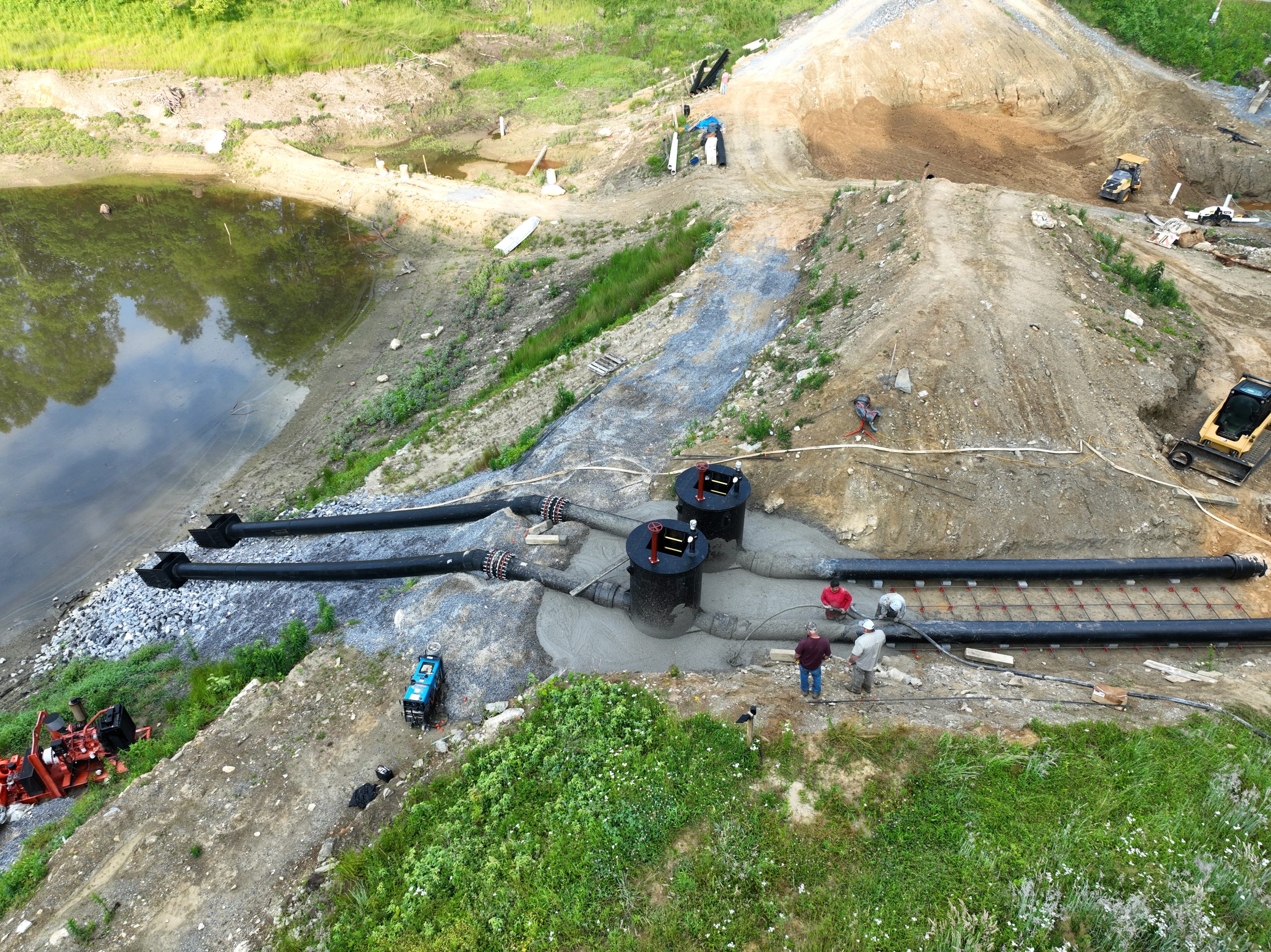
New 20-inch HDPE siphons and vaults with butterfly valves engineered for durability, maintenance, and to control the flow of water Deteriorated steel pipes and an aging CMP conduit requiring full replacement
- Internal erosion risks and potential subsurface voids within the embankment
- Semi-hydraulic fill construction is rarely encountered in modern practice, with unpredictable performance characteristics
- Large-scale excavation and reconstruction using unstable, century-old materials
- Need for internal drainage improvements to collect seepage
Our Technical Approach
To inform the rehabilitation design, S&ME performed a bathymetric study to quantify lake storage, along with hydrologic and hydraulic analyses to evaluate drawdown performance. These evaluations confirmed that two new 20-inch HDPE siphons were required to meet Tennessee Safe Dams’ lake drawdown requirements.
In addition, S&ME completed a dam breach analysis and inundation mapping to update the Emergency Action Plan (EAP), strengthening downstream risk preparedness. A geotechnical subsurface exploration and slope stability analysis identified additional concerns, including a dam core constructed with semi-hydraulic fill methods commonly used in the 1940s,but no longer considered safe by modern standards.
The investigation also revealed an original corrugated metal pipe (CMP) outlet embedded within the dam, raising concerns about deterioration, internal erosion, and overall long-term dam stability.
Key Engineering Solutions
-
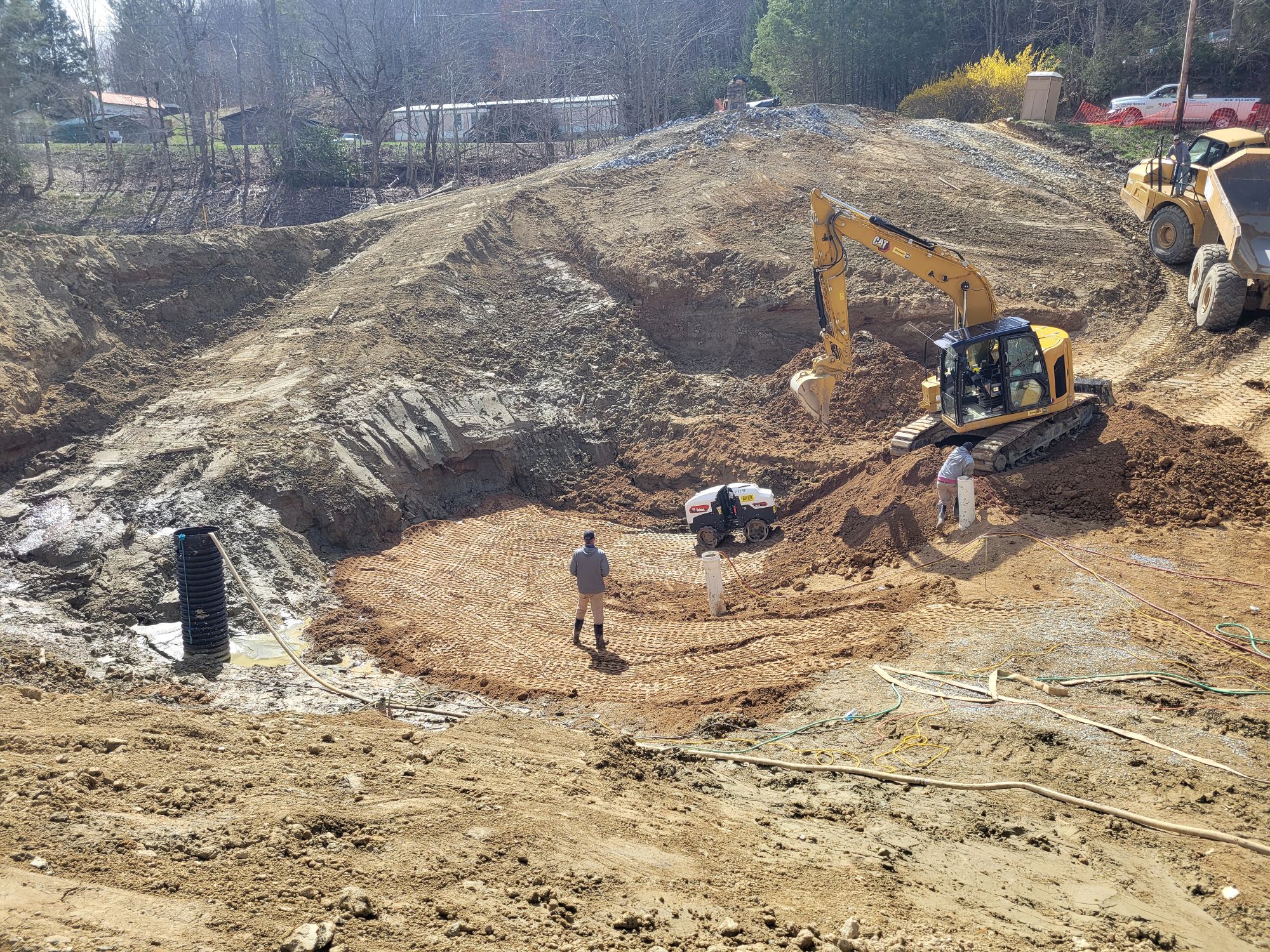
Excavation and filling of original dam embankment to remove 100-year old CMP conduit and unstable semi-hydraulic fill Installation of two new 20-inch HDPE siphon drains engineered for durability and low maintenance
- Construction of a chimney drain, blanket drain, and toe drain to manage internal seepage
- Widening of the dam crest by five feet to improve stability
- Construction of an earthen stability berm to reinforce embankment performance
- Selective excavation and removal of semi-hydraulic fill and obsolete CMP conduit
- Grouting of voids and replacement with compacted off-site borrow materials
- Continuous CQA observation and testing throughout construction
These efforts reflect S&ME’s broader engineering services approach, combining analysis, design, and construction-phase support.
Planning a similar project? Get support from our engineering services consultants.
Stress Test: Hurricane Helene
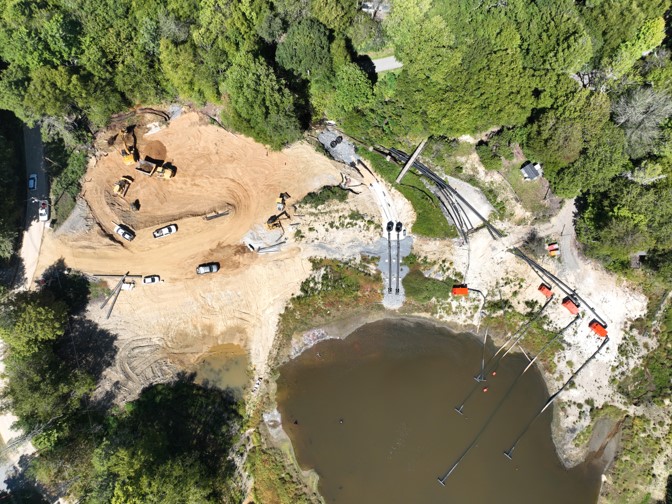
During reconstruction, Hurricane Helene delivered 15 inches of rainfall over two days, turning an already complex rehabilitation into a real-time stress test.
With the dam partially deconstructed and temporary systems in place, the team had to rapidly adapt to manage extreme inflows, maintain dewatering operations, and prevent overtopping.
This required real-time field adjustments and close coordination between design and construction teams, integrating modern engineering solutions with legacy infrastructure under rapidly changing conditions.
The combination of…
→ Newly installed siphons
→ Supplemental pumping
→ A temporary spillway notch
…allowed the system to perform as intended, preserving dam integrity under severe conditions.
The Impact
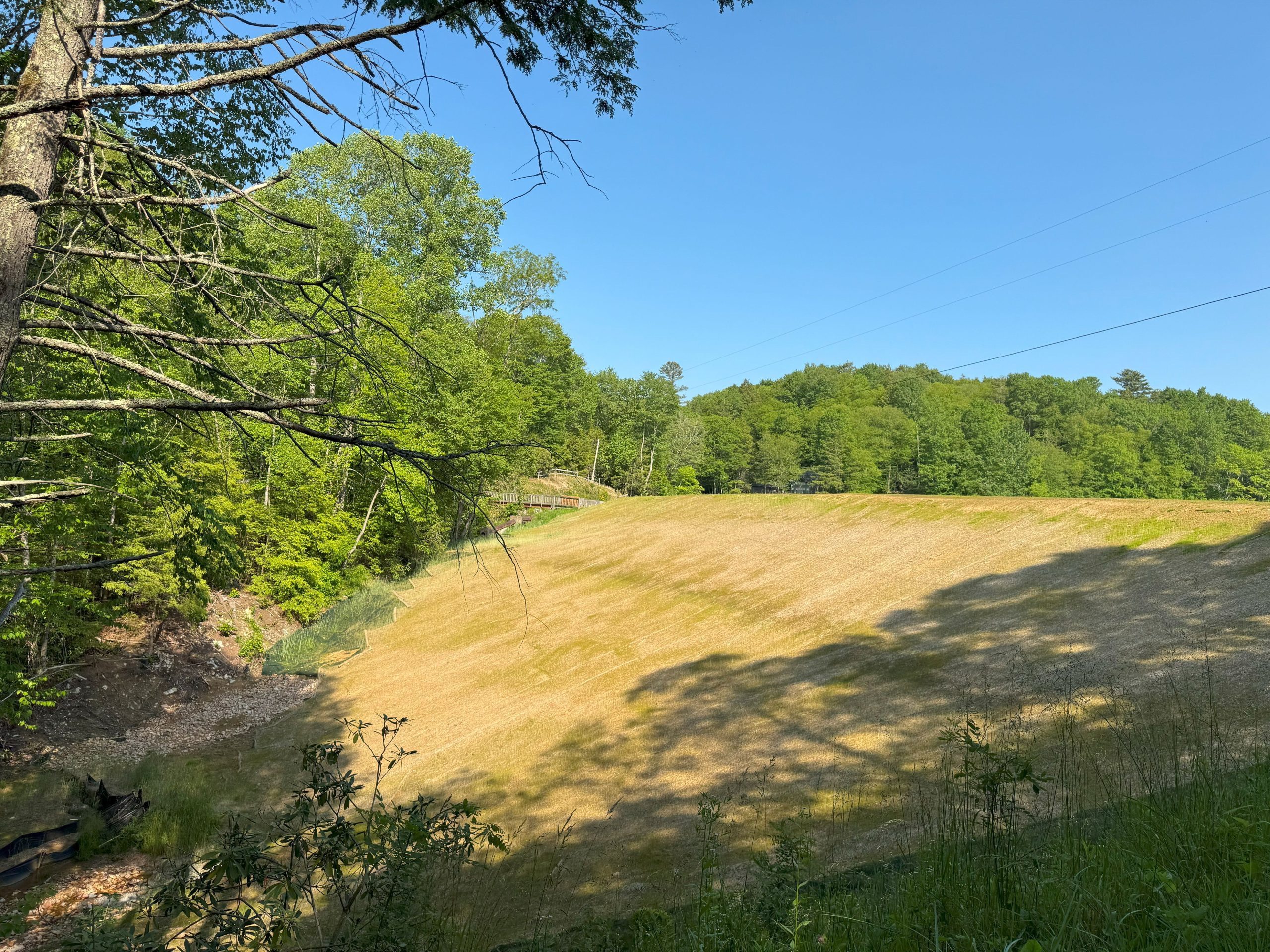
This project stands out for its complex blend of historical construction, modern engineering, and adaptive field decision-making.
S&ME’s comprehensive engineering services delivered a resilient, modernized dam that significantly enhances safety by eliminating internal erosion risks, improving hydraulic control, and strengthening slope stability and seepage management. New HDPE siphons and upgraded drainage systems reduce long-term maintenance while stabilizing the embankment.
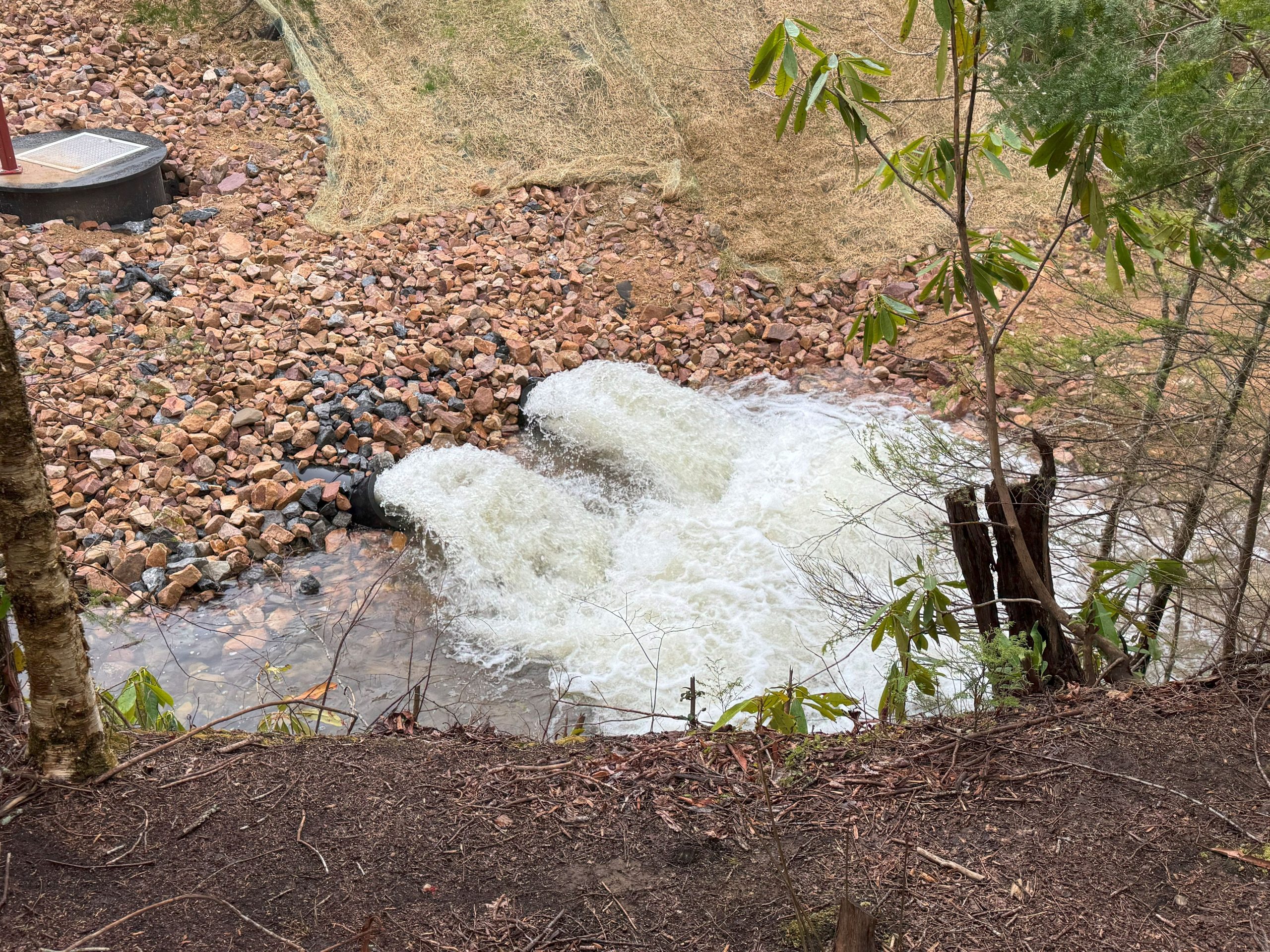
These improvements safeguard nearby homes, businesses, and infrastructure, ensure the reliable operation of a valued community lake, and protect the environment through careful construction practices. The project also boosts property values and ecosystem health by supporting stable water levels and long-term environmental quality.
Overall, the Ripshin Lake Dam rehabilitation restored structural integrity and delivered enduring community benefits through enhanced safety, reduced owner costs, and modernized, environmentally responsible systems.
Project Presentations & Accolades
- 2024 S&ME Technical Conference
- 2025 ASDSO National Dam Safety Conference Presentation and White Paper
- 2025 TN American Council of Engineering Companies (ACEC) Award Gala – Water Resources Grand Award Winner
- 2025 ASCE Knoxville Branch Technical Seminar, November 11, 2025
- 2025 ASCE Birmingham Branch Technical Seminar, December 4, 2025
- 2026 ASCE TN Section Technical Conference, February 13, 2026
- Upcoming – 2026 Virginia Tech Center for Geotechnical Practice (CGPR) Annual Meeting, April 2, 2026
- Upcoming – 2026 TN Water Resources Association – TN Water Resources Symposium, April 17, 2026
- Upcoming – 2026 American Council of Engineering Companies (ACEC) National Awards Gala, May 5, 2026