
October 27, 2026
Geotechnical investigation, in situ testing, and geotechnical laboratory testing
Location: Charleston, South Carolina
Owner: U.S. Army Corps of Engineers
Client: Hana Engineers and Consultants
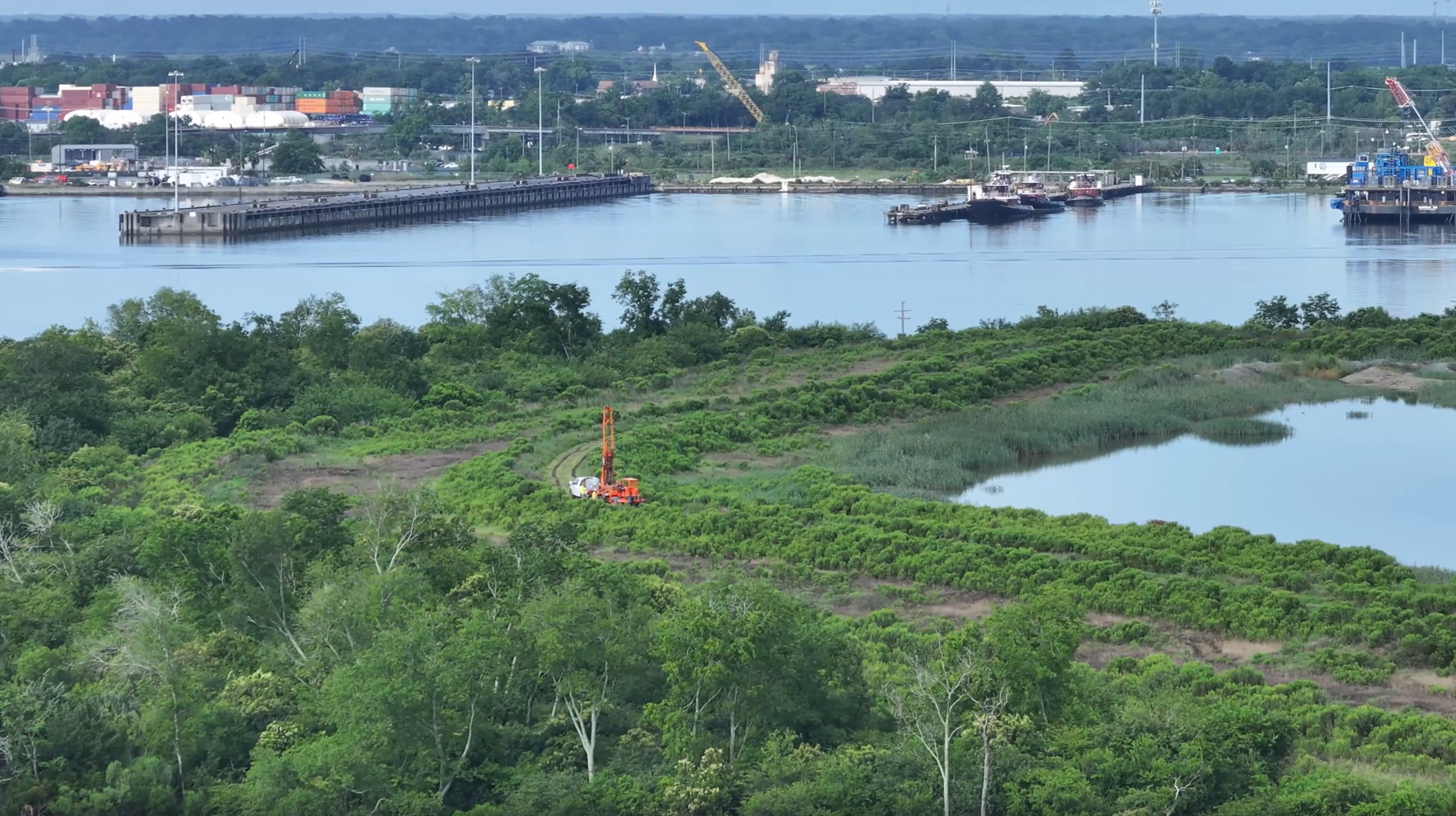
- Investigated a 1,400-acre dredged material management site located near the Charleston Harbor and Cooper River.
- Completed 26 Standard Penetration Testing (SPT) soil borings, 124 Cone Penetration Testing (CPT) soundings, and 15 vane shear tests across island perimeter and internal dikes.
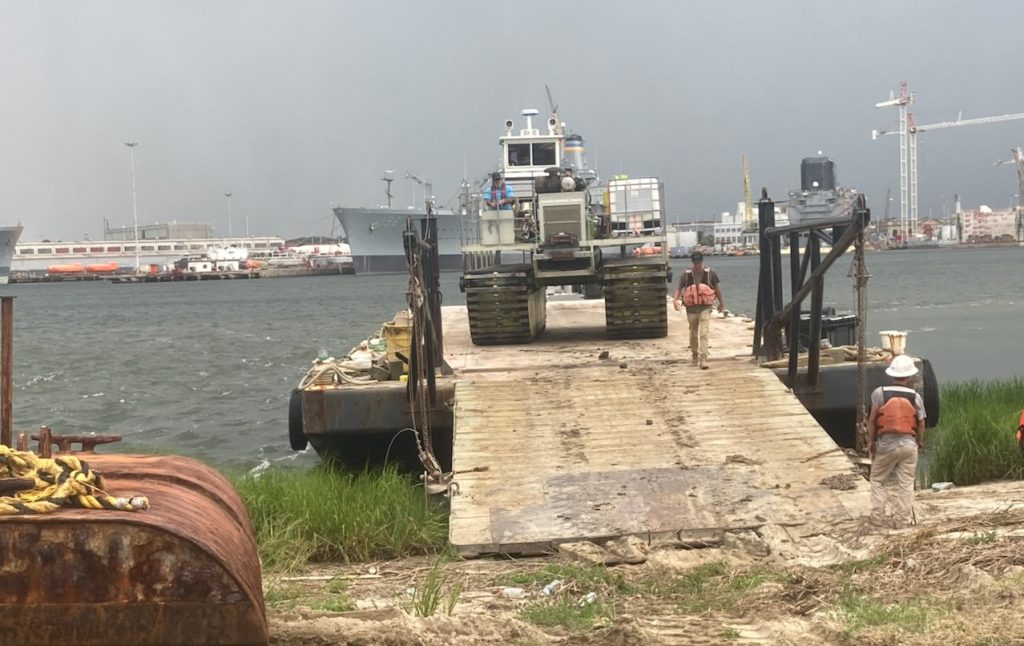
- Mobilized crews and specialized drilling equipment by boat and barge to navigate tidal waterways, wetlands, steep slopes, and soft ground.
- Developed subsurface data to support future dike raisings and continued dredged material placement capacity.
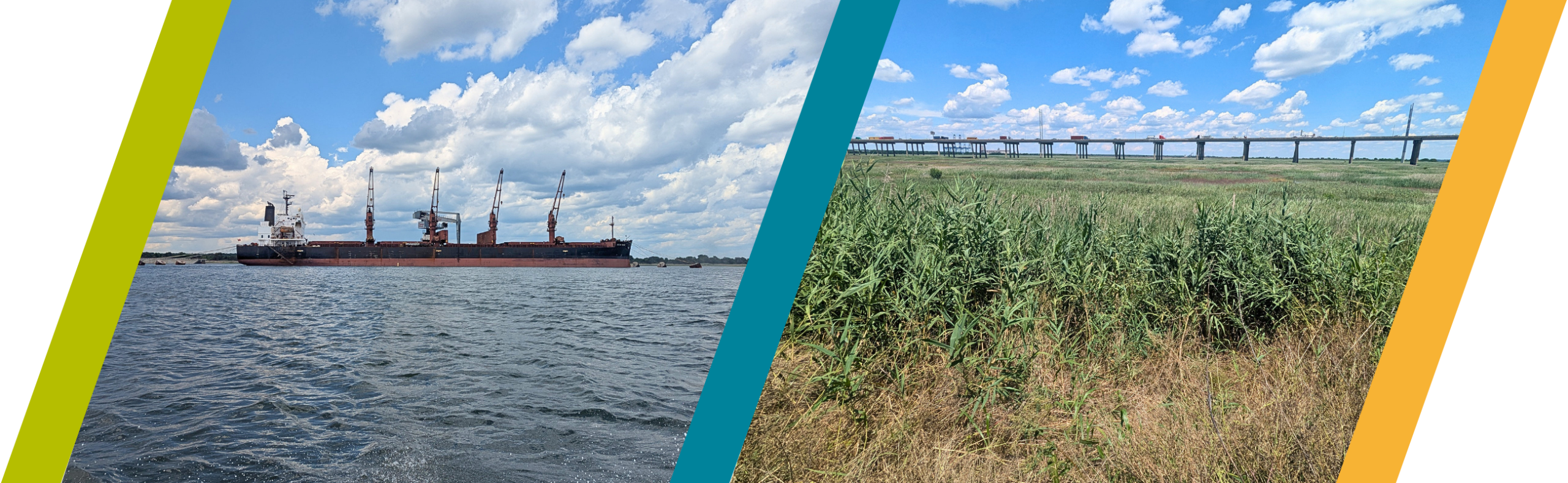
Background: Charleston Harbor Dredging and Clouter Creek Placement Operations
Charleston Harbor is the 8th largest U.S. container port and requires recurring maintenance for safe vessel passage and the movement of goods. Silt, clay, and other material wash in from the Ashley, Cooper, and Wando rivers as they flow into the Atlantic Ocean, building up at the bottom of the navigation channel.
To mitigate depth restrictions, the U.S. Army Corps of Engineers (USACE) maintains an authorized channel depth of 52 feet through a process called maintenance dredging. Over two million cubic yards of material from the harbor channels are excavated biannually to preserve the deepest port on the East Coast.
This dredged material is pumped into permitted and diked placement areas. A 1,400-acre, man-made island named Clouter Creek Placement Area is a dredged material management facility on the Cooper River. It must be carefully engineered to support the navigation channels and the South Carolina port system, a sector with $87 billion economic impact, employing one in nine jobs statewide.one in nine jobs statewide.
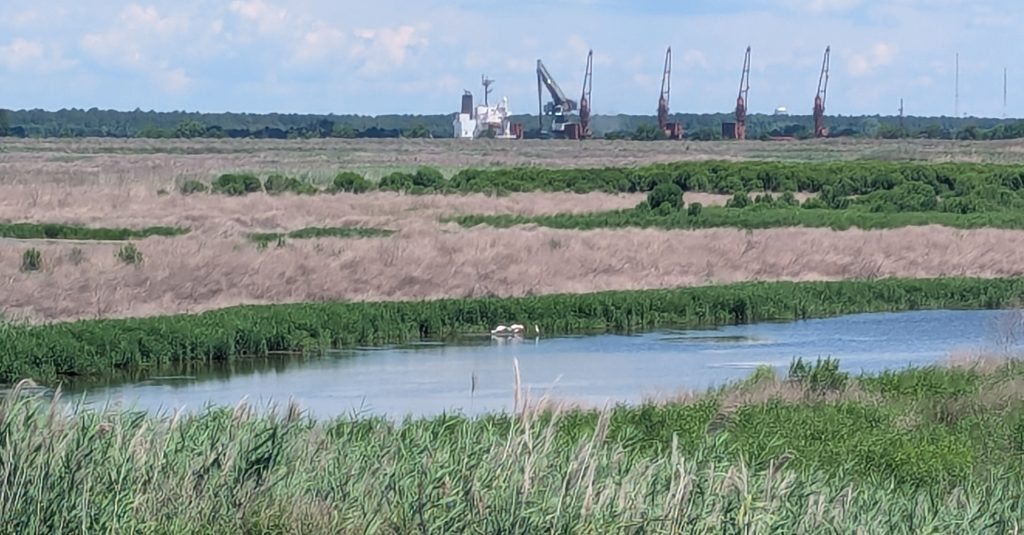
Dredged material deposited on Clouter Creek Placement Area in varying stages of drying and revegetation, with a bulk carrier at the Charleston Midstream Transfer Facility on the Cooper River operating in the background.
The Challenge: Difficult-Access Geotechnical Drilling on Placement Cell Dikes
As dredged material accumulates, the Clouter Creek Placement Area dikes must be raised to preserve freeboard and capacity for future dredging cycles. The island cannot expand outward into the river, so dike raisings use upstream construction, widening the dikes toward the placement area interior.
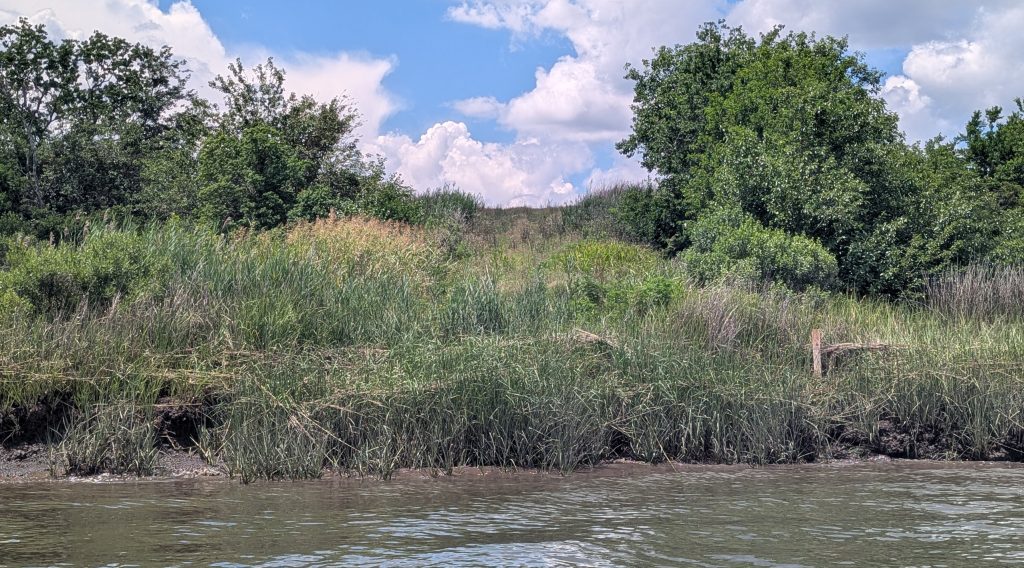
Exterior view of Placement Area dike from Clouter Creek.
S&ME conducted a comprehensive geotechnical exploration to gather subsurface data for dike raising.
Fieldwork included 26 testing locations, focused on perimeter dikes and the internal dikes separating the North, Highway, Middle, and South cells of the Clouter Creek Placement Area.
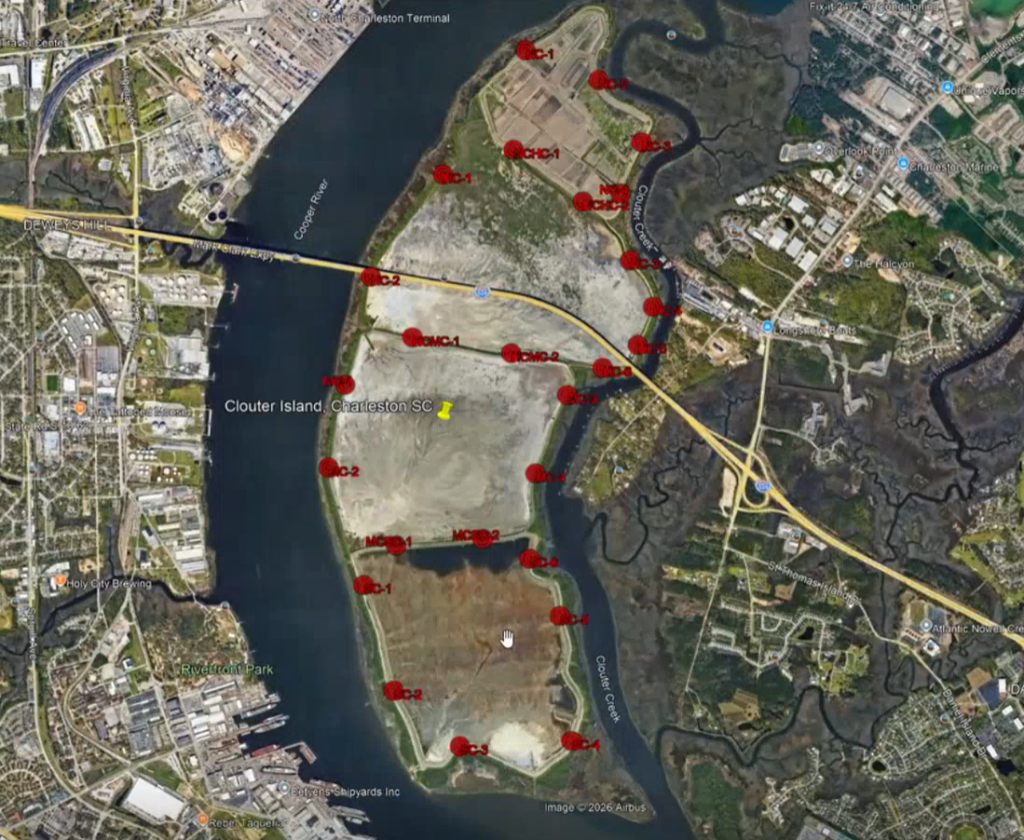
Testing locations marked with red dot along cells’ perimeter.
Dredged material can take months to years for the water to drain, and its dessicated surface can retain a jelly-like consistency immediately below. Reaching targeted exploration points required equipment suited to steep slopes and saturated soils while limiting disturbance to soft subgrade and dike surfaces.
“The greatest field challenge was accessing the locations on rough terrain and selecting methods that would produce reliable information across highly variable ground conditions,” says Regional Director of Field Exploration, Jarod Ford.
Technical Approach: Specialized Drilling Fleet
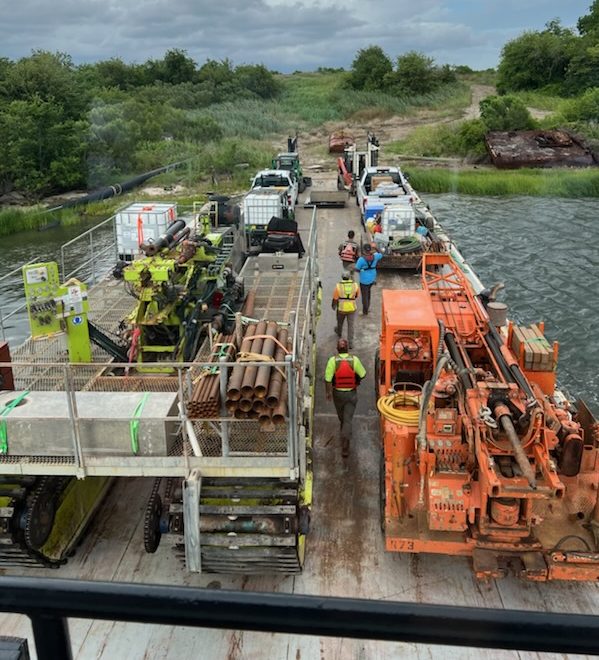
S&ME mobilized drilling equipment to the island by ramp barge with push-boat support, where it remained until the fieldwork was complete. Each day, personnel traveled by drop-deck boat between the marina and the island, returning with soil samples collected during the day’s drilling.
A fleet of specialized equipment helped the geotechnical investigation team reach targeted drilling locations:
- Rubber-tire All-Terrain Vehicle (ATV): Supported efficient travel along the dikes and performed most of the investigation work.
- Amphibious rig: Completed soil borings in soft, saturated dredge-cell conditions using low ground-contact pressure.
- Skid-steer-mounted CPT rig: Traversed steep, uneven dike slopes and positioned CPT equipment at testing locations that larger rigs could not reach.
Accessing the sampling locations required careful navigation across dike slopes that were steep, uneven, and overgrown with vegetation. The vegetation obscured the ground surface and limited clear travel paths, while the slope made it difficult to position and stabilize equipment at the designated points. S&ME used winches to lower and control equipment on the dike, allowing the team to reach sampling locations along the slope and complete the work while minimizing disturbance to the dike surface.
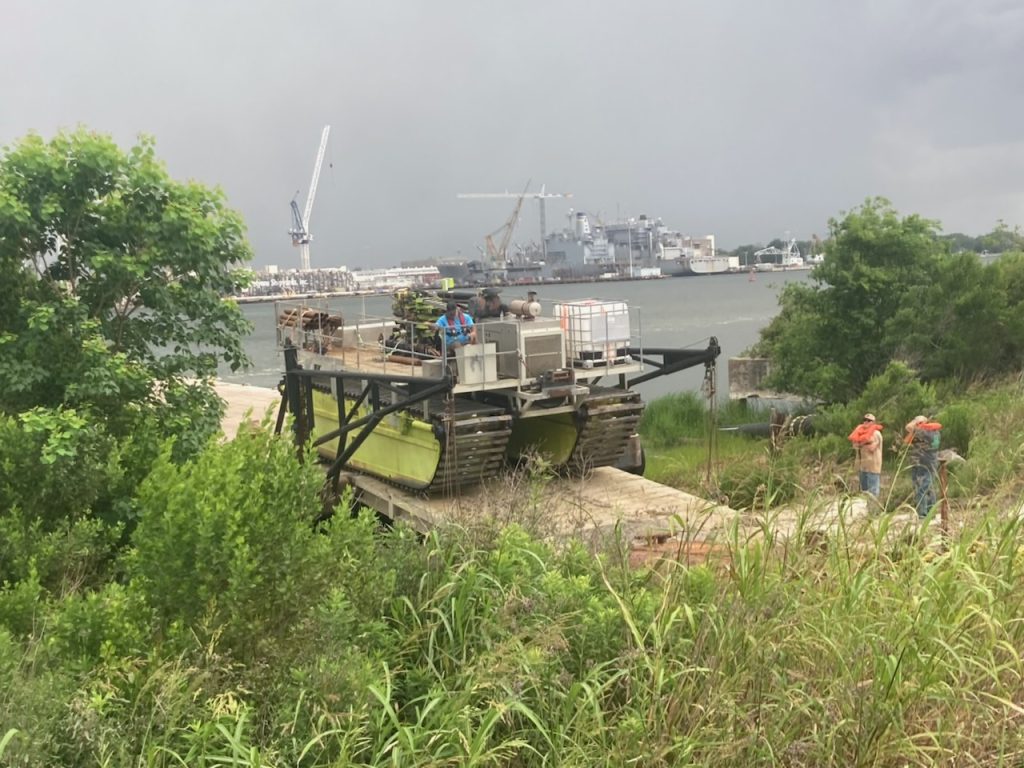
Amphibious rig prepared for soft ground conditions.
Once collected, the soil samples were sent to subcontracted labs as well as S&ME’s U.S. Army Corps of Engineers certified labs for analysis.
Impact: Subsurface Data for Dike Raising and Long-Term Placement Capacity
Broad subsurface coverage and detailed soil characterization provide the data needed to inform future dike-raising designs, determine whether engineering controls such as geosynthetics and geogrids are needed, and identify areas that may require reinforcement.
The investigation data supports evaluation of foundation conditions, stability, and whether material within the cells is suitable for reuse in dike construction.
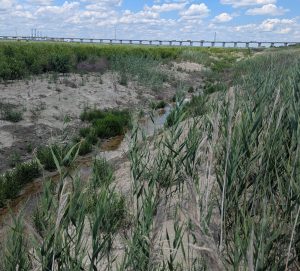
Dike raising provides the capacity needed to manage dredged material and maintain authorized waterway depths for vessel passage.
“The value of this investigation is in what comes next: giving the design team subsurface data to plan future dike raisings and preserve long-term placement capacity,” says Technical Principal, Aaron Goldberg, PE.
Through its geotechnical investigation, S&ME is supporting the continued operation of Charleston Harbor, a vital economic engine for the Southeast. The future of the Clouter Creek Placement Area is a crucial component to the revenue generated by the waterfront and shipping industry. Having the deepest harbor on the East Coast expedites logistics for port customers and enhances South Carolina’s competitiveness, helping to drive cargo growth and create jobs.